

Quick Insights Enterprise B2B purchasing stalls when buyers are forced through slow, multi-step...
The Autonomy Era: How AI Agents for eCommerce Drive B2B Growth
The Autonomy Era: How AI Agents for eCommerce Drive B2B Growth
As online retail scales, modern merchants are shifting from static chatbots to autonomous workflows. Incorporating AI agents for eCommerce into your digital storefront represents a strategic leap from simple question-answering to fully automated operations. These intelligent systems operate 24/7, making real-time decisions to streamline support, optimize checkout, and personalize product recommendations.
For B2B brands, this shift eliminates the manual bottleneck of disconnected admin work. Instead of forcing your team to copy-paste data between legacy spreadsheets and your CRM, autonomous agents bridge the gap. They turn your website into an active revenue driver rather than a passive brochure.
Let's examine how this technology works and why it has become the standard for scaling merchants in 2026. 👉 Calculate your outsourcing ROI with our free calculator to estimate your direct operational savings before reading further.
Why AI Agents for eCommerce Outperform Traditional Chatbots
Traditional customer communication tools are limited by rigid decision trees. If a customer asks a question outside of a pre-written script, the system fails. This friction often results in lead leakage, high cart abandonment, and frustrated clients.
Traditional automation tools focus entirely on basic word matching. They cannot handle context shifts or interpret non-standard requests, leaving buyers stranded. When a high-value client meets a dead end, they often abandon their cart for a competitor.
Unlike standard rule-based chatbots, AI agents for eCommerce do not rely on fixed menus. They understand natural-language intent, analyze context, and reason through multi-step workflows. This deep reasoning capability is why B2B brands choose an experienced collaborative technical partner to design and deploy custom agentic storefronts.
Key Takeaway: The primary difference lies in the transition from conversation to action. While a chatbot can only show a tracking link, an autonomous agent can log into an order management system, verify shipment status, and resolve issues independently.
Key Workflows Managed by AI Agents for eCommerce
Deploying autonomous systems across your B2B storefront streamlines three critical business areas: customer support, product discovery, and lead management. By automating these processes, you can scale operations without increasing headcount.
By deploying AI agents for eCommerce in customer service, businesses can automate up to 80% of routine inquiries. This rapid resolution rate drops average first-response times from hours to under four minutes. Your human support agents are then freed to focus on high-value, complex client relationships.
Additionally, AI agents for eCommerce act as virtual shopping assistants, interpreting natural language intent. Instead of sorting through complex filtering menus, buyers can describe their requirements in plain text. The system analyzes catalog data in real time to match the buyer with the exact specifications they need.
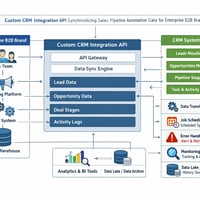
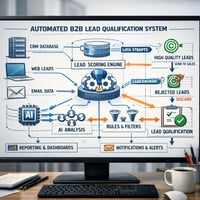
Finally, these agents integrate with your sales pipeline to prevent lead leakage. They capture high-intent queries, qualify prospects, and sync the data with your CRM. This ensures your sales team receives enriched, pre-qualified deals ready for close.
Overcoming Manual Bottlenecks in the Purchase Journey
B2B procurement is notoriously slow due to complex buying cycles and multi-layered approvals. Buyers spend valuable time researching technical specifications and waiting for sales representatives to respond to basic inquiries. This operational latency stalls transactions and impacts your overall sales velocity.
Implementing AI agents for eCommerce eliminates these systemic delays by providing instant, accurate technical support. These systems handle complex pricing logic and volume discounts automatically during the active research phase. By acting as a high-capacity silent partner, these custom applications execute read-write workflows at the point of intent.
Comparing Legacy Automation to Agentic Systems
The table below highlights how AI agents for eCommerce differ from legacy automation tools:
| Operational Metric | Legacy Chatbots | AI Agents for eCommerce | | :--- | :--- | :--- | | Response Logic | Rigid decision trees | Natural language reasoning | | Data Integration | Manual or disconnected | Live database API sync | | Execution Capability | Read-only link sharing | Full read/write workflow execution | | Operational Impact | Static text delivery | 30% reduction in support costs | | Lead Capture | Basic contact forms | Real-time qualification & CRM sync |
This structural difference translates directly to improved bottom-line performance. By moving away from rigid scripts, B2B brands can offer consumer-grade buying experiences at scale.
Calculating the Business Value and ROI
When evaluating the financial impact, AI agents for eCommerce offer measurable, compounding returns. Industry benchmarks demonstrate that merchants implementing custom agents see an average 15% increase in conversion rates. This revenue acceleration is driven by sub-second product matching and zero-latency buyer assistance.
Beyond immediate conversions, the operational efficiency gains are substantial. Your business can handle spikes in transaction volume without needing to scale your support staff proportionally. This decoupling of support costs from sales growth is key to building a highly scalable B2B enterprise.
Investing in bespoke AI agents for eCommerce ensures zero lead leakage and a streamlined client experience. By eliminating manual bottlenecks, your team can refocus on high-impact strategic growth. The technology pays for itself by reducing operational overhead while driving higher average order values.
To help you navigate this transition, we have compiled the most common questions regarding AI agents for eCommerce.
FAQ
What is the difference between an AI agent and a standard chatbot in eCommerce?
While a standard chatbot relies on pre-programmed decision trees to deliver links or static answers, an AI agent utilizes reasoning engines to plan multi-step workflows. These systems access live databases and execute actions autonomously. This shift from simple conversation to direct action represents a significant leap in efficiency.
How do B2B brands integrate custom AI agents with HubSpot CRM?
Integration is achieved by building secure, authenticated API bridges. These connections allow the agentic system to read contact records and update deal pipelines in real time. By logging customer interactions automatically, the system eliminates manual data entry and prevents lead leakage.
What is the average timeline and ROI for deploying custom AI agents for eCommerce?
Most custom deployments range from four to eight weeks, depending on the complexity of your backend integrations. Within the first 90 days, businesses see an average 30% reduction in support costs. Additionally, conversion rates typically rise by 15% due to faster, personalized buyer assistance.
👉 Try It Live: Run this exact multi-language indexing agent inside our AI Playground now (Corporate Email Required).
Manual administrative bottlenecks and disconnected systems should not hold back your B2B eCommerce growth. Schedule a 15-minute strategy consultation with our certified integration engineers today to see how a custom-built AI agent can autonomously streamline your workflow and accelerate your revenue.
Get Started at growers.marketing
Or contact us: contact@growers.marketing