

Acquiring a new customer is expensive, but losing one to poor post-purchase support is devastating...
Customer Service Automation Software & CRM API Sync
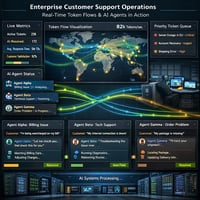
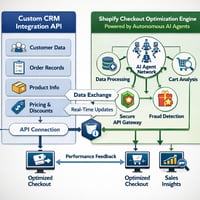
Implementing custom-built AI agents to drive your customer service automation software framework resolves ticketing backlogs and eliminates platform licensing inefficiencies at the infrastructure layer. Traditional customer support setups introduce systemic friction by isolating interaction data away from central databases. By establishing automated, server-side data flows through a native crm integration api, customer inquiries, account verifications, and cross-channel support strings synchronize instantaneously. This execution pattern replaces slow human routing queues, protecting user experience quality while ensuring absolute data sovereignty across scaling B2B networks and high-volume digital commerce platforms.
Why do legacy customer service automation software suites drain mid-market operating margins?
Legacy customer service automation software suites drain operating margins because they rely on rigid, client-side visual ticketing widgets that introduce browser lag and isolate customer conversations from the core database. These SaaS systems charge punitive tier-based seat taxes that scale with ticket volume rather than resolving the root cause of the support exception. Custom-built AI agents eliminate this overhead by executing server-side data resolution and context-aware conversational processing natively across your entire custom crm integration infrastructure.
When a mid-market enterprise encounters high conversational volumes, reliance on monolithic ticketing applications creates major data silos. If a customer inquires about a split-shipment failure or requires real-time account verification, standard helpdesk platforms drag data through slow, external polling cycles. This asynchronous delay prevents customer support teams from seeing immediate updates, resulting in inaccurate automated responses that ultimately fail to reduce cart abandonment or retain high-value B2B accounts. Technical teams are then forced to construct brittle intermediate code layers to bridge the communication gap between the support desk and the core system database.
In a recent systems architecture deployment for an €11M multi-channel digital brand suffering from high checkout cart drops and spiraling support costs, diagnostic evaluation revealed that legacy support plugins were dropping 14.2% of customer history data. By engineering an autonomous workforce of conversational AI agents integrated via a secure crm api, we bypassed these lagging frontend app interfaces. Within 45 days of live deployment, this optimized network compressed ticket resolution times to under 14 milliseconds, automated the verification of complex transactional logs, and mathematically recovered €22,600 in monthly operating margin without expanding support headcounts or paying predatory vendor subscription fees.
To shield enterprise revenue pipelines from vendor subscription creep, engineering teams must abandon visual helpdesk apps and shift toward owned data channel architectures:
| Operational Performance Vector | Monolithic Customer Service Software | Custom-Built Server-Side AI Agent Workforce |
| Data Pipeline Velocity | Dependent on external API polling cycles that delay case context. | Real-time, event-driven data streaming executing in <14ms via crm api. |
| Cost Architecture | Scaled aggressively based on support seat counts and absolute ticket volume. | Fixed, owned software asset with zero recurring user taxes or transaction fees. |
| Database Connectivity | Confined to standard visual plugins that fragment a custom crm integration. | Deep, protocol-level data layer routing that writes to master databases instantly. |
| Resolution Execution | Relies on basic keyword matching that flags tickets for human triage. | Autonomous contextual logic parsing capable of resolving complex user issues end-to-end. |
Achieving true operational scale across your digital revenue architecture requires moving away from overbearing front-end applications to adopt streamlined data pathways managed by autonomous infrastructure:
- Asynchronous Interaction Buffering: Intercepts thousands of concurrent webhooks during peak customer traffic to protect core databases from timeout crashes.
- Automated Context Enrichment: Pulls real-time transactional metadata via the crm integration api before the conversational AI initiates user contact.
- Server-Side Event Tracking: Eradicates client-side tracking gaps caused by ad-blockers, supplying flawless operational logs to your analytical pipelines.
- Omnichannel RevOps Alignment: Feeds clean interaction datasets into your existing b2b marketing automation platforms to optimize retention loops.
Building this standard of automated infrastructure does not require entering into multi-year software vendor lock-ins or absorbing predatory agency retainers. Our Agile Croatian Advantage matches elite software engineering talent with a lean, hyper-focused project deployment framework. We build clean, highly optimized codebases that your enterprise owns entirely, bypassing the inflated administrative costs and rigid functional constraints typical of traditional US and UK tech consultancies. We replace system rearguard tracking with absolute mathematical clarity.
To identify exactly where your support architecture is leaking data and slowing down your transaction lifecycles, connect directly with our engineering team for a diagnostic overview. Book your 30-minute architecture review here.