

Mid-market e-commerce operations lose up to 70% of potential revenue to systemic checkout friction...
Global Expansion with AI and Ecommerce Support
Quick Insights
- Cross-border e-commerce expansion frequently stalls because localized buyer anxieties during off-peak hours are left completely unaddressed.
- Relying on expensive overseas agency retainers or client-side translation plugins bloats operating costs and degrades front-end load speed.
- Deploying server-side conversational AI infrastructure enables instant multi-language engagement while preserving site speed and net profit margins.
Why do localization barriers halt global cross-border revenue growth?
When enterprise brands expand into international markets, translating catalog copy is rarely enough to drive sustainable sales. True friction occurs during the micro-moments of the buyer journey when regional anxieties arise. International shoppers routinely abandon checkouts over unanswered questions regarding localized customs duties, regional sizing conversions, import taxes, or cross-border return policies.
If a buyer in Tokyo or Frankfurt encounters a shipping doubt at 3:00 AM EST, they will not wait for a US-based customer service team to go online hours later.
Static FAQ pages cannot adapt to region-specific context or dynamic order configurations. When international shoppers encounter communication friction at the moment of peak purchase intent, they simply close the tab. This drives up cross-border customer acquisition costs (CAC) and caps international revenue expansion.
How do multi-language translation plugins and call centers create a financial trap?
To resolve international support gaps, e-commerce leaders usually default to two flawed methods: contracting overseas call centers or installing third-party translation app plugins. Overseas customer support agencies demand high monthly retainers, require continuous training on changing product catalogs, and introduce significant brand voice inconsistency due to high turnover.
On the technical side, third-party translation apps operate via heavy client-side JavaScript.
Executing these unoptimized scripts on international storefronts creates severe document object model (DOM) rendering delays. This slows down page load speeds precisely when mobile networks in target regions may already be constrained. Renting more human hours or layering front-end software scripts creates a linear cost structure that eats into the exact cross-border profit margins you are attempting to build.
What are the commercial benefits of server-side ai ecommerce architecture for international scaling?
Achieving profitable global growth requires replacing front-end plugins with an owned, server-side conversational infrastructure. By hosting localization logic within your dedicated cloud perimeter, all language translation and dynamic reasoning occur on the server side, ensuring zero impact on browser load speeds.
An enterprise ai ecommerce architecture operates as a 24/7 localized sales concierge. When a global user hesitates on a product or payment page, the system dynamically engages them in their native language across dozens of dialects.
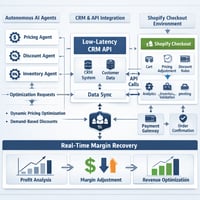
Because the conversational layer connects directly to your central inventory management, regional warehouse logistics, and customs databases via low-latency APIs, it delivers authoritative, real-time answers instantly. It clarifies localized shipping rules, confirms regional duty calculations, and guides cross-border shoppers to complete their purchase. This approach allows brands to deploy conversational ai for ecommerce to scale international revenue predictably without incurring additional headcount or software overhead.
To evaluate how legacy cross-border support models compare against owned server-side AI infrastructure, review the operational breakdown below:
Stop treating international market expansion as a headcount and software plugin problem that drains your margin. Transition to a modern digital architecture built for global commercial dominance.
To learn how your brand can eliminate cross-border friction and scale global revenue without operational bloat, click here to book your strategic infrastructure assessment today.