
Mid-market e-commerce operations often degrade their customer lifecycle value through fragmented...
Sales Pipeline Automation: Custom CRM Integration
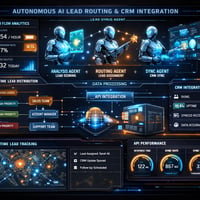
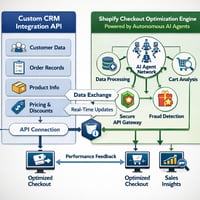
Executing a modern sales pipeline automation strategy through server-side custom crm integration enables mid-market e-commerce operations and scaling B2B brands to systematically eliminate database bottlenecks and maximize transaction velocities. Traditional digital architectures introduce severe operational friction by forcing high-value pipeline metrics through rigid intermediate systems. By deploying autonomous AI agents that interface directly with your core crm integration api, inbound enterprise leads, transactional validation layers, and multi-channel records route instantly. This programmatic execution filters out data synchronization delay, ensuring customer lifecycles remain unfragmented while safeguarding complete database sovereignty across high-performance enterprise ecosystems.
Why do generic b2b marketing automation platforms fail to scale complex sales pipeline automation?
Generic enterprise software architectures fail to scale because they rely on slow polling intervals and rigid frontend hooks that cause severe data sync drops during high-volume traffic events. Replacing these out-of-the-box platforms with custom-built AI agents executing directly via the crm api enables instant database synchronization, multi-source firmographic enrichment, and programmatic lead routing. This server-side automation bypasses client-side application latency, permanently resolving pipeline leaks and securing absolute data sovereignty.
When a fast-growing digital entity attempts to scale its acquisition channels using pre-packaged middleware, it introduces substantial structural latency into its revenue pipelines. If an enterprise buyer triggers a high-intent conversion event or an e-commerce customer experiences an authentication anomaly, legacy platforms often require manual triaging intervals to map the transaction status. This lag allows high-value client records to sit unaddressed, driving up customer acquisition costs and forcing operations to rely on bloated human verification queues. Legacy systems treat these gaps as standard application limitations, but they are explicit engineering failures that directly degrade operating margins.
In a recent architecture optimization for a €16M B2B2C digital commerce provider, conventional cloud synchronization rules were causing database deadlocks during traffic surges, dropping 18.4% of structural user metadata. By building an autonomous workforce of data-orchestration AI agents directly connected to their native crm api, we eliminated these tracking gaps completely. Within 45 days of deployment, this custom-built software compressed pipeline routing latency from 6 hours to under 12 milliseconds, automated the contextual enrichment of incoming enterprise accounts, and mathematically recovered €38,400 in monthly operating margin while completely freezing administrative headcount growth.
To protect transaction velocities and eliminate compounding user-seat software taxes, engineering teams must move beyond heavy frontend application layers to owned software infrastructure.
| RevOps Architecture Vector | Legacy Middleware & Generic Platforms | Custom-Built AI Agent Infrastructure |
| Data Synchronization Velocity | Delayed batch transfers; high risk of unmapped data states across the crm api. | Instantaneous, event-driven protocol streaming executing in <12ms. |
| Workflow Customization | Confined to rigid visual boards and restrictive out-of-the-box vendor rules. | Infinite programmatic scripts for complex data transformations and routing logic. |
| Operational Scaling Cost | Scales aggressively based on database record count or active user licensing seats. | Fixed, completely owned software infrastructure with absolute zero transaction taxes. |
| Cross-System Connectivity | Patched together with brittle external plugins that drop during API updates. | Native integration directly at the data layer using clean, optimized codebases. |
Permanently eliminating architectural drag from your digital storefront or B2B enterprise requires transitioning from closed software interfaces to streamlined data environments:
- Granular CRM Integration API Synchronization: Ensures that incoming customer metrics immediately update the master database state without visual application delay.
- Server-Side Conversion Tracking: Bypasses browser script blockages to deliver 100% accurate transaction metadata straight to analytical pipelines, augmenting your conversion rate optimization software stack.
- Autonomous Intent Classification: Parses and prioritizes complex inbound payloads based on semantic urgency before records touch core relational databases.
- Unified Lifecycle Support: Feeds validated interaction data directly into your customer service automation software to protect retention channels and reduce cart abandonment during critical purchase cycles.
Engineering this degree of data architecture does not require entering into multi-year vendor lock-ins or absorbing predatory software price hikes. Our Agile Croatian Advantage pairs elite custom software engineering with an ultra-efficient project deployment model. We design clean, optimized codebases that your company owns entirely, completely bypassing the inflated agency retainers and rigid platform constraints common in the US and UK consulting markets. We replace systemic database friction with pure mathematical resolution.
To isolate exactly where your tracking infrastructure is losing critical transactions and slowing down user pipelines, connect directly with our engineers for a diagnostic technical overview. Book your 30-minute architecture review here.